14 July 2026
X-factor makes the difference
BLOG: In an increasingly physical and thoroughly analysed game, players with x-factor are decisive.
By Dag Vidar Hanstad

The new generation of players is a joy to watch. They have pace and technique, they take on opponents 1v1, and they can create chances almost on their own. Antonio Nusa, Oscar Bobb and Andreas Schjelderup showcased themselves at the World Cup. Nusa scored that beautiful goal against Ivory Coast, dropping a defender, cutting inside and placing the ball beyond the keeper’s reach. The crowd at Ullevaal has seen him do the same many times. Expectations rise every time he receives the ball out wide.
There was more uncertainty around the other two x-factor players. Would national team coach Ståle Solbakken dare to trust Oscar Bobb and Andreas Schjelderup? He certainly did. Both got plenty of minutes, and they absolutely repaid that faith. Bobb was on the pitch in every game and constantly caused problems for the opposition. Schjelderup provided assists and finished the tournament by earning a place in the starting line-up against England. He marked the occasion by giving Norway a 1–0 lead.
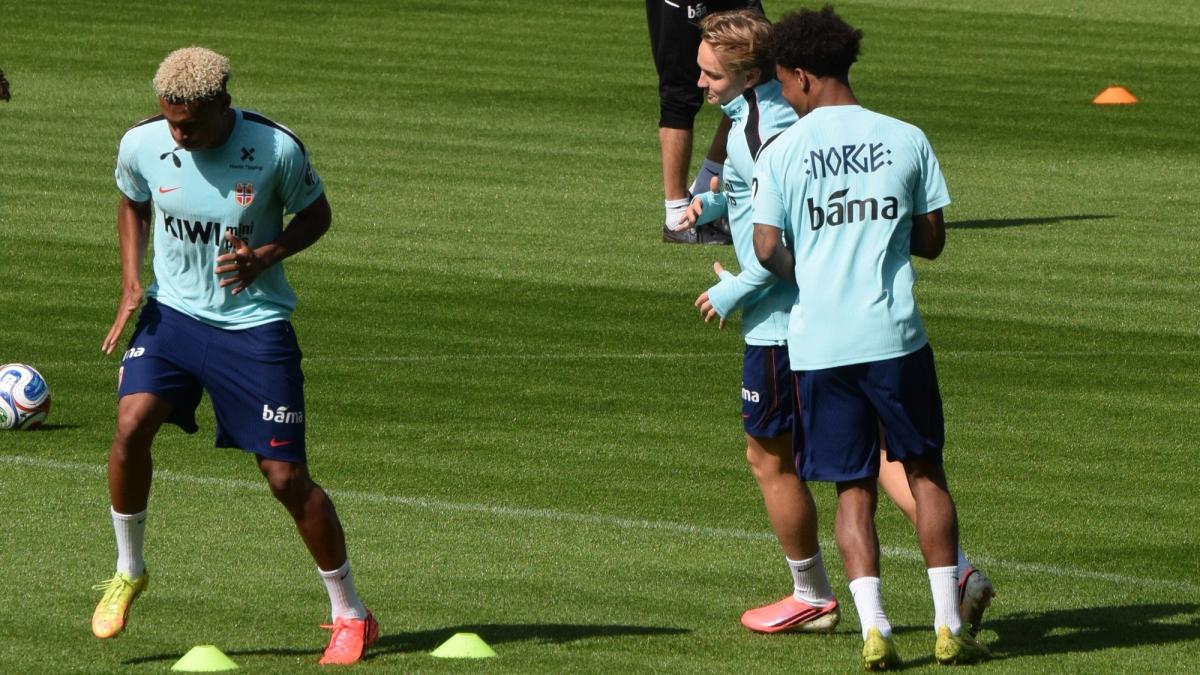
Playfulness is something all three have brought with them from childhood. And they still play. In the build-up to the World Cup, TV 2 filmed Nusa, Bobb and Schjelderup staying out in the sun after training to keep playing, as if this were something remarkable. To the channel Oscar Bobb said:
“I don’t think there is anything more fun. It’s something we do after every session.”
The national coach wants x-factor
Given how much more physical football has become, it would not have been surprising if Ståle Solbakken had left at least one of the three at home and brought a more robust player instead. Why did he choose to take all three?
He did not answer that directly when I met him at Ullevaal for an interview before the World Cup. But he did emphasise that the modern game demands more than organisation, running power and physique. Every team is well trained, every player covers a lot of ground, every side is structured. That is when the details of what you do with the ball become decisive. Teams need enough x-factor.
Nusa, Bobb and Schjelderup are not alone. Looking at today’s Norwegian national team, it is striking how many players have a clear x-factor. Erling Braut Haaland is a physical beast, but he also has extreme pace and finishing skills that allow him to score from almost any angle. Martin Ødegaard has close control and positional sense that enable him to dictate the rhythm of the game. Suddenly he finds a teammate with a pass that the rest of us have to watch several times in slow motion before we understand how he saw it.
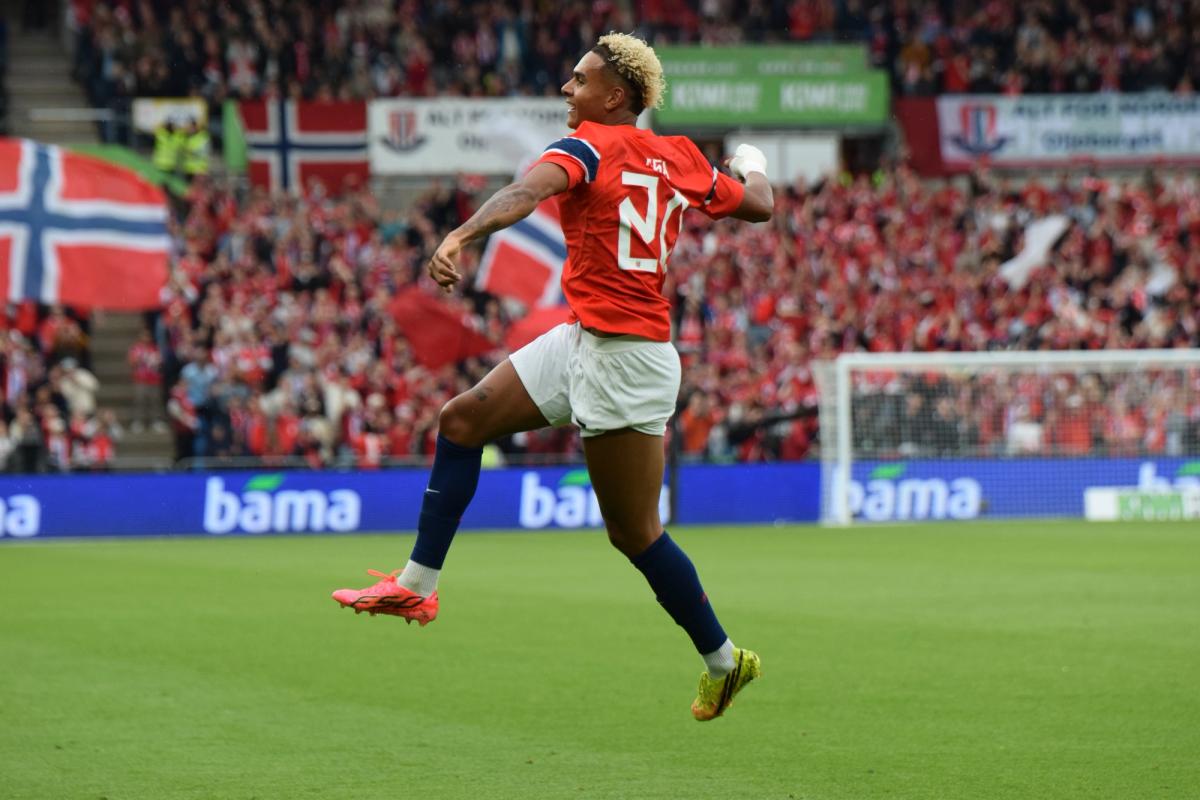
Why is it that Norway now has such different player types than the last time the country played at a World Cup? The team of the 1990s was defined by physicality, a powerful collective, strict organisation and discipline (on the pitch, if not always off it). It was enough back then, but it would not be sufficient today. Every team now has those elements. Norway’s x-factor then was a 60-meter diagonal pass ( the “Flo pass”) from Stig Inge Bjørnebye to Jostein Flo, often used when Norway could not counter against a disorganised opponent. In midfield we had a key player who was at his best without the ball. Øyvind Leonhardsen, in truth, stood out primarily because he ran and ran. Most of the time without the ball, but he was still an attacking weapon.
The one who came closest to today’s types was Erik Mykland, with his lovely technique, along with Tore André Flo. Perhaps a 2026-version of “Myggen” could have adapted to the current physical demands, but that brings us straight into the futility of comparing today’s team with the heroes of the 1990s. Kjetil Rekdal, the man who scored in the opening match against Morocco in 1994 and converted the decisive penalty against Brazil four years later, put it this way to Aftenposten: “The difference is so big it’s almost unbelievable. When I see clips of myself, I think ‘bloody hell, slow motion’.” Rekdal believes the current Norway side would simply blow his generation off.
Good work on player development
Players with x-factor have clearly spent a lot of time playing freely, but they are also products of a system in which clubs and the federation have created good conditions for growth. At Nye Nadderud I met Gaute Larsen to talk about talent development, and inevitably we ended up discussing x-factor with this blog in mind.
Larsen has been a coach for 35 years and has worked with several players who have reached the international level. He was, for example, the one who brought Erling Braut Haaland into the first-team squad at Bryne. As head of elite player development at Stabæk he followed Antonio Nusa closely, along with a number of others. Stabæk is a talent factory that refines players – and then sells them on.
Those who know Gaute Larsen are well aware that he does not talk up his own importance. But it is obvious that he knows a great deal about developing talent. He looks for x-factor in young players and helps to turn what they are already good at into something outstanding. That is at least as important as improving the things they are weak at.
In the years ahead, Norway will produce more young players with that X-factor. At the same time, players like Nusa, Bobb, and Schjelderup are still young. In other words, it will be exciting to follow the Norwegian national team.


